

Guide 08 of 14
Are TV speakers enough for your home?
You may not need extra speakers for serials and news. But if film dialogue sounds muffled or cricket feels flat, a soundbar can help. Start with your room and what you watch, not the wattage on the box.
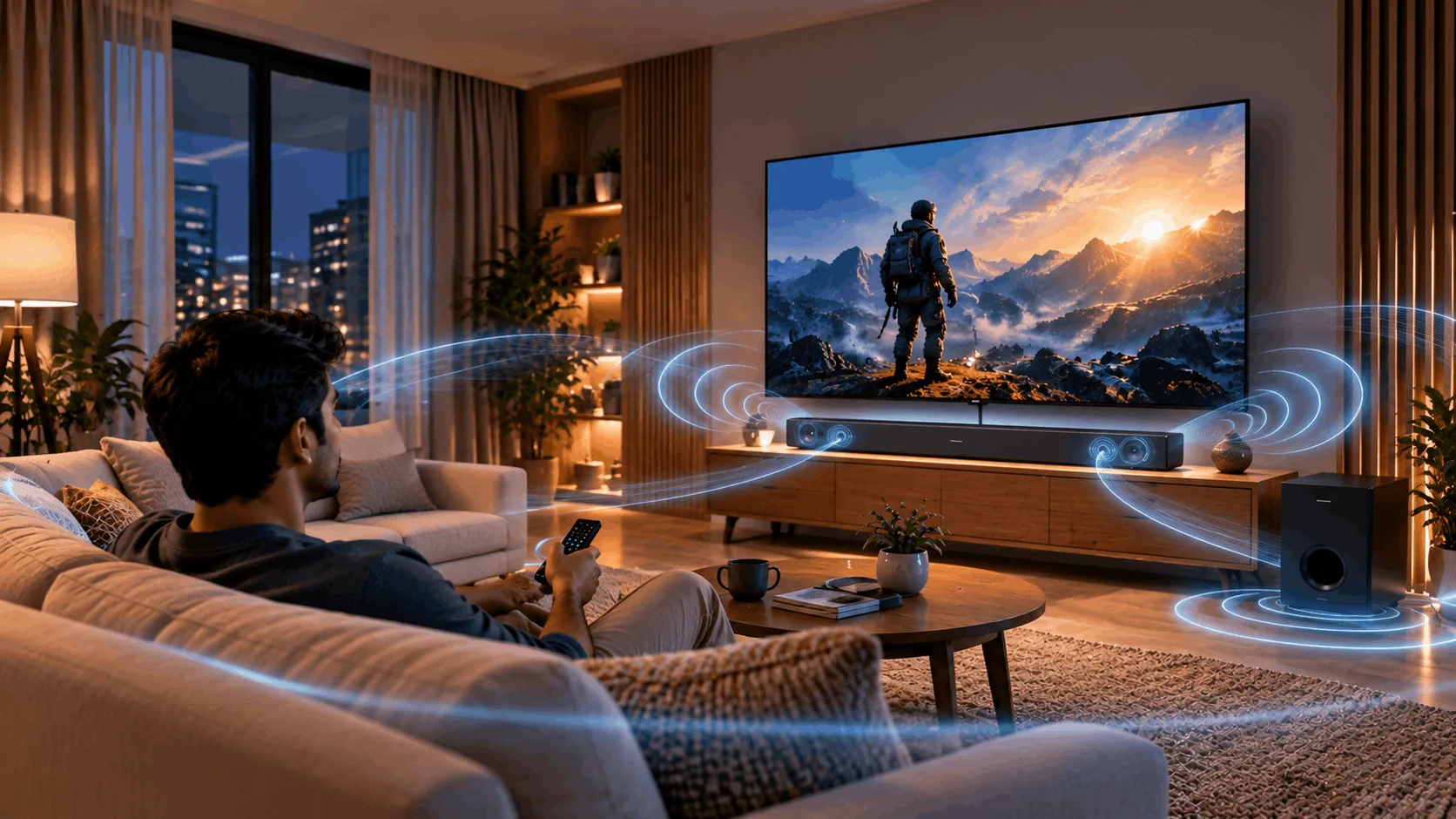
Why it matters
- Thin TVs, small speakersThin TVs leave little room for speakers. They can handle everyday viewing, but may struggle to give films weight or make speech clear.
- Watts aren't sound qualityA 40W rating doesn't automatically mean better sound than 20W. Wattage describes power, not how clear voices sound or how balanced the sound feels.
- Clear speech helps everyoneDialogue or voice enhancement modes make speech stand out. They're worth checking, especially for older viewers who find background music louder than the conversation.
Four ways to hear your TV
Keep the TV speakers if they work for you. Add separate speakers when you need clearer voices, stronger bass or more immersion.
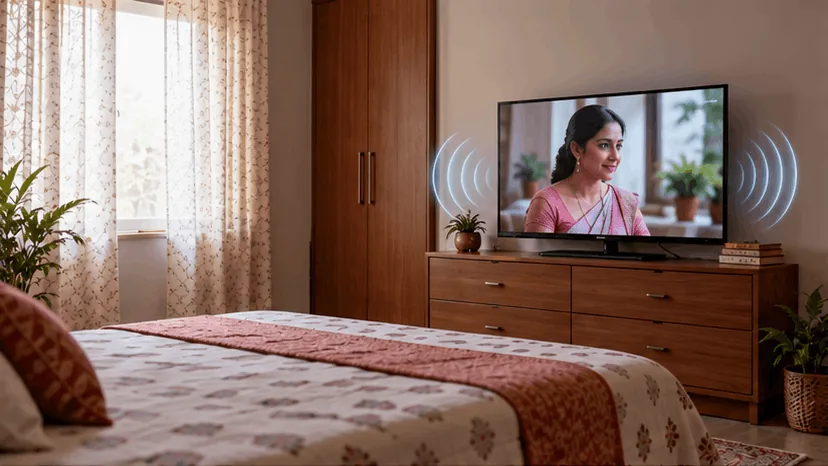
TV's own speakers
IncludedStart here before spending more
The speakers built into your TV. They're fine for news, serials and small rooms. Try the TV's speech settings before buying anything extra.
- Good
- No extra purchase
- No extra boxes or wires
- Fine for everyday viewing
- Watch out
- Small speakers limit fullness
- Bass can feel weak
- Dialogue may get buried
Best for: News, serials and a small bedroom TV.
Compare the everyday differences
Swipe sideways to see every option.
| TV's own speakers | 2.0/2.1 soundbar (with subwoofer) | Dolby Atmos soundbar | Home theatre 5.1 | |
|---|---|---|---|---|
| Sound quality | Fine for everyday viewing | Fuller everyday sound | Height with supported films | Most immersive |
| Bass | Weak | Good with subwoofer | Often has subwoofer | Strong |
| Dialogue clarity | Varies by TV | Clearer | Clearer | Clearest (centre speaker) |
| Space needed | None | Bar and subwoofer | Bar, sometimes more | Speakers around room |
| Rough cost | Included | ₹8K–₹20K | ₹20K–₹60K+ | Highest; varies |
Which one is right for you?
What do you mostly watch?
Check these before you buy
- Listen to familiar dialogue, not just loud music, when comparing speakers.
- Check Amazon or Flipkart listings for included subwoofers and rear speakers.
- Use HDMI ARC/eARC for one-cable audio and TV-remote volume control; eARC supports full-quality Atmos.
- Optical audio works, but format support is limited compared with HDMI eARC.
- Measure soundbar clearance and speaker space; check dialogue modes for older viewers.
Watch it explained
Videos by other creators. Tap to play here.
Common questions
Are watts important when choosing TV speakers or a soundbar?
Don't choose by watts alone. A 20W or 40W figure isn't a sound-quality score. Listen for clear speech, balanced sound and bass that doesn't drown out voices.
What is HDMI ARC/eARC?
ARC means Audio Return Channel: an HDMI connection that sends TV sound to your soundbar. One cable carries audio, and your TV remote controls volume. eARC is the enhanced version, needed for full-quality Atmos. Check both devices support it.
Is a Bluetooth speaker okay for TV sound?
It can work if your TV supports Bluetooth audio, but speech may lag behind lip movements. It's fine to try a speaker you already own. For regular TV viewing, a soundbar connected through HDMI ARC/eARC is a better fit.
Does the soundbar need to match my TV brand?
No. Matching brands isn't necessary for basic sound. Check compatible connections, especially HDMI ARC/eARC. Some extra features may need matching devices, so read the listing and manuals before buying.
What is Dolby Atmos?
Dolby Atmos is a sound format that adds height effects, making some sounds seem above you. You need supported content and compatible equipment. An Atmos badge alone doesn't guarantee convincing effects; the room and soundbar also matter.
The bottom line
Start with TV speakers. Choose 2.1 for clearer voices and bass, Atmos for supported films, or 5.1 when you have space.